Remarks by Ambassador at the India-Uzbekistan Business Forum Central Asian Expocentre, Tashkent; June 18, 2026

Remarks by Ambassador at the India-Uzbekistan Business Forum
Central Asian Expocentre, Tashkent; June 18, 2026

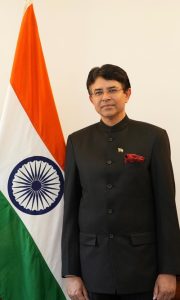
H.E. Mr. Abdulla Azizov, Director of the Agency for the Development of the Medical and Pharmaceutical Industry under the Ministry of Health H.E. Ambassador Sardor Rustambaev Joint Secretary from Ministry of Commerce & Industry Mr. Mohit Yadav When we look at the amazing trajectory of our relations, we are looking at an ecosystem that is deep and rooted in civilizational affinities. These deep bonds between our peoples were simultaneously sustained by commerce trade and philosophical exchanges. Centuries ago, Indian merchants guided massive caravans across the Hindu Kush mountains into very hearts of the buzzing cities of Samarkand and Bukhara. Indian merchants brought along premium Indian cotton textiles, vibrant indigo dyes, raw cane sugars, ghee and spices like black pepper and cardamom that permanently enriched Central Asian culinary cultures and sariyok known as ghee in India. I am sure my Uzbek friends are aware that Ibn Sina spoke about the benefits of sariyok which modern science is now corroborating. Uzbek traders exported several thousands of horses to India alongside ceramics and dry fruits. If I am not mistaken, this was not a primitive cash-and-carry system. Indian bankers set up permanent shop inside Uzbek markets and established the Hundi system—effectively an advanced, paper-based bill of exchange. A merchant could deposit his earnings in Central Asia, receive a handwritten credit note, and encash it later in Agra decoupling financial risks from the physical transport. It was one of the most vibrant trade systems in the world. Historians amongst us might have some understanding of the value which must have been billions of dollars in current terms. Now the question is that if this historical synergy was so powerful and organic why it faced a modern slowdown? Actually, we all know the answer. Geopolitics and denial of direct land connectivity to our countries have placed a frustrating brake on this vibrant trade partnership. We are now trading via maritime ports and sometimes via air. The current situation in west Asia has also not been conducive to trade affecting economies, our lives and inflating the logistical costs. In the long run, I am of the view that this stagnation in connectivity created by narrow politics will become unsustainable. India’s voracious industrial appetite is expanding at an unprecedented rate. Driven by green energy transition, the electric vehicle revolution, and mass urbanization, India will one of the biggest consumers in the world. I think the annual copper requirement alone is projected to hit four to five million metric tonnes by 2035. There is demand for fertilisers, critical tech material and agri products like saffron or asafoetida which is an expensive product (USD 260-270 per kilogram) and world’s 80 percent of it is consumed by India alone. All this creates a macro-developmental match for Uzbekistan, which is scaling up its own output. Simultaneously, India can export at a fraction of the cost of other suppliers. We are called the "pharmacy of the world," as we produce high -quality, affordable generic life-saving medicines We can also supply rugged, climate-resilient machinery, mobile technology, and automotive parts built specifically to handle intense wear and tear - at a thirty to forty percent less price compared to expensive equipment that have rigid maintenance contracts. I am also conscious that the ultimate breakthrough for our strategic partnership lies in joint ventures, co-production, and sustainable development projects. We are therefore investing in Uzbekistan in several sectors and our investments are now close to USD 750 million and expected to cross a USD 1 billion mark. I encourage investments in health education, agro processing, financial services, IT and infrastructure development. The signing of Bilateral Investment Treaty has helped. As your economy continues to grow and expand, we also invite investments from Uzbekistan to take advantage of the growth story unfolding in India. There is another interesting recent development that I wish to share. Increasingly more and more Indian students are coming to Uzbekistan for studying medicines. They contribute close to USD 100 million to the Uzbek economy. We are the largest source country for global student mobility contributing USD 70 billion to the global economy including Uzbekistan. There is lot of potential here and we must work together to address issues of mutual interest and concern. Both Ambassador Sardor Rustambaev and I are coordinating this effort. Another area I see potential is in spiritual and wellness tourism including Ayurveda. Yoga market today in the world is USD 136 billion and Ayurveda market close to USD 25 billion. We have been long training yoga enthusiasts in Uzbekistan. In a chaotic fragmented world, people seek peace and stillness. Because of its beauty, Uzbekistan can be a hub of wellness tourism in Central Asia and beyond. Our resorts like Ananda in the Himalaya have been voted by the Condé Nast Traveller Readers' Travel Awards as the Favourite Destination Spa" and have been also ranked as the #1 Destination Spa in the Rest of the World. So, let us work on this. I am glad that two of the Indian pharma companies present here have evinced interest in investing in Ayurveda products in Uzbekistan. Also, I think there is merit in working towards designing direct local currency payment mechanisms. This will be the digital evolution of our ancestors' Hundi credit notes. We congratulate Uzbekistan for their phenomenal growth under President Mirziyoyev and the reforms initiated and implemented. we strongly support your efforts and also your membership to WTO on which a Protocol has recently been signed between our countries. Just to let you all know last year we had 250 Indian nationals visit Uzbekistan for business purpose and I think tourism from my country has already crossed the hundred thousand mark. In the same spirit, we also look forward to a very strong participation from the Uzbek side at the BRICS MSME forum tomorrow. As we hold the next meeting of Inter Governmental Commission in Tashkent, we are fully committed to translating our mutual respect and goodwill into concrete, practical outcomes for the benefit of peoples of both our nations.

List of Former Consuls General of India in Tashkent

List of Former Consuls General of India in Tashkent

Sl. No. Name From To Photograph
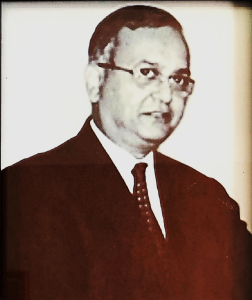
1 Shri Yogendra Kumar 18.06.1987 06.06.1990 Shri Yogendra Kumar
2 Shri Asoke Mukerji 06.06.1990 17.03.1992 Shri Asoke Mukerji
3 Shri Asoke Mukerji Charge d’ Affairs 18.03.1992 18.12.1992 Shri Asoke Mukerji
×

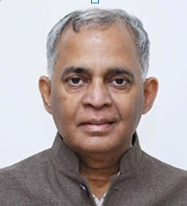
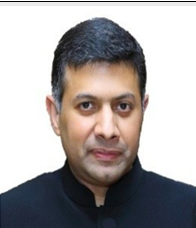
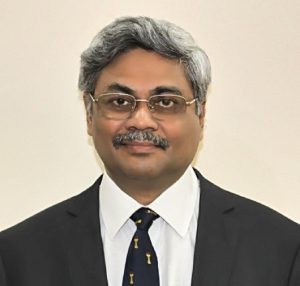
List of Former Ambassadors of India to Uzbekistan

List of Former Ambassadors of India to Uzbekistan

Sl. No. Name From To Photograph
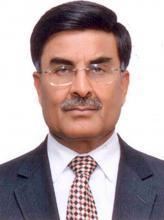
1 Shri Dalip Mehta 22.12.1992 07.04.1995 Shri Dalip Mehta
2 Shri M. K. Bhadrakumar 27.08.1995 27.11.1998 Shri M. K. Bhadrakumar
3 Shri Bhaskar K. Mitra December 1998 June 2002 Shri Bhaskar K. Mitra
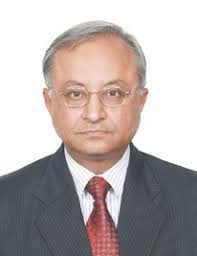
4 Shri Sharat Sabharwal 13.08.2002 15.07.2005 Shri Sharat Sabharwal
5 Shri Skand R. Tayal 26.08.2005 31.08.2008 Shri Skand R. Tayal
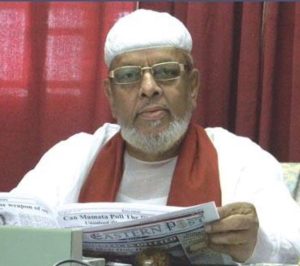
6 Shri Syed Manal Shah Alquadri 05.12.2008 05.12.2010 Shri Syed Manal Shah Alquadri
7 Shri A. Gitesh Sarma 18.08.2011 16.07.2014 Shri A. Gitesh Sarma
8 Shri Vikram Doraiswami 30.10.2014 09.04.2015 Shri Vikram Doraiswami
9 Shri Vinod Kumar 14.05.2015 30.04.2019 Shri Vinod Kumar
10 Shri Santosh Jha 25.07.2019 July 2020 Shri Santosh Jha
11 Shri Manish Prabhat 24.09.2020 01.04.2024 Shri Manish Prabhat
×

Uttar Pradesh International Trade Show

Uttar Pradesh International Trade Show

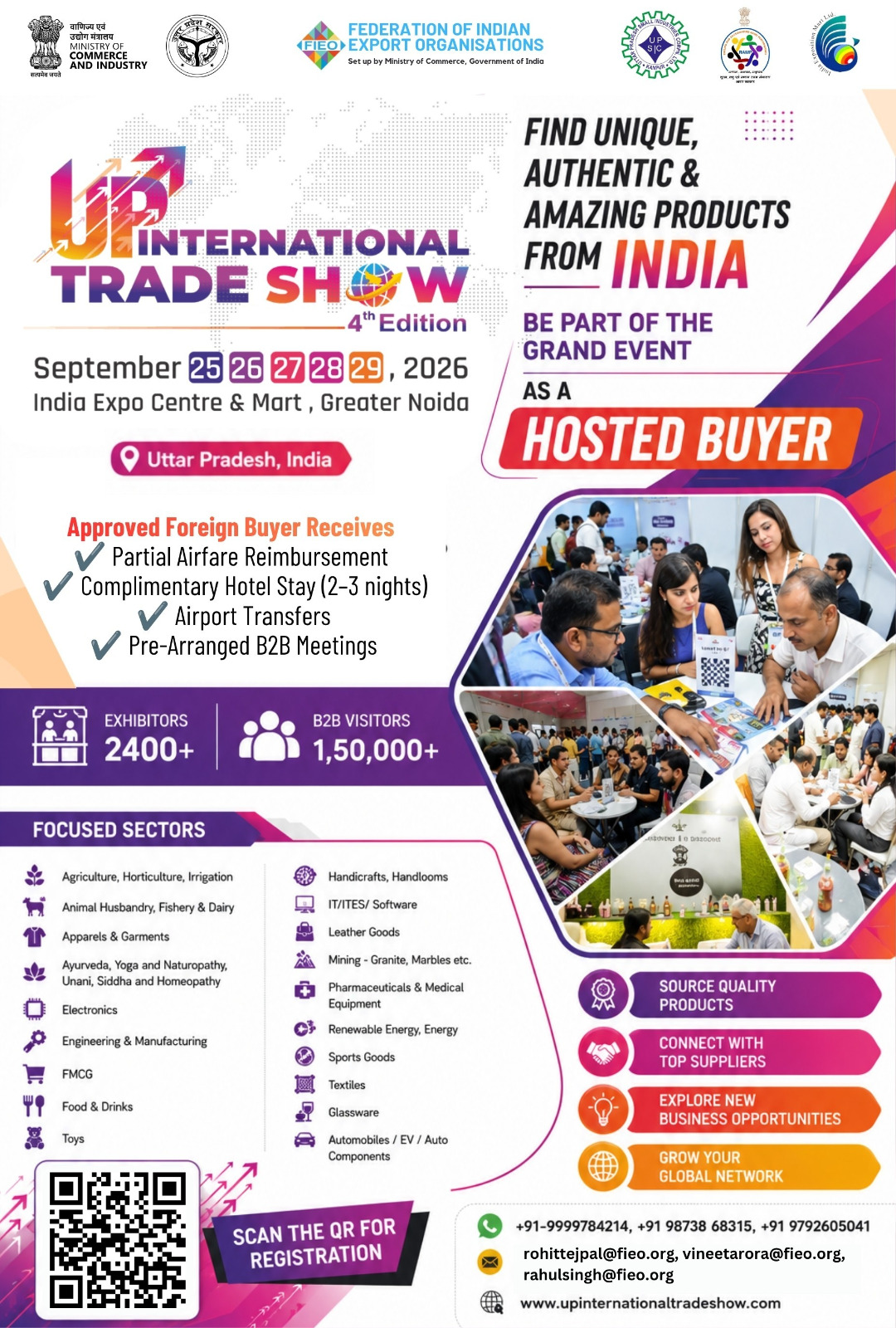
1.The State Government of Uttar Pradesh is organising the 4th Edition of the Uttar Pradesh International Trade Show (UPITS), scheduled to be held from 25th to 29th September 2026 at the India Expo Centre & Mart in Greater Noida.

2.The State Government had previously organised three editions of this event in 2023, 2024 and 2025 in Greater Noida. According to State Government, these events attracted over 5,00,000 attendees and resulted in a number of business deals.

3.Uttar Pradesh targets to become a trillion-dollar economy by 2027. Therefore, the Government of Uttar Pradesh attaches great importance to this event. As it aims to showcase their export potential, Missions/Posts are requested to promote the 4th Edition of the Trade Show like they did in previous editions. The promotional materials for UPITS can be accessed at the following link: https://upinternationaltradeshow.com/links/ and the primary preliminary registration link for overseas buyers has been activated at the following link: https://forms.stage.eventstrat.org/form/W3EUAIDL.

4. For any immediate coordination or supplementary material required by Missions/Posts abroad, the nodal officer, Mr. Rohit Tejpal, Deputy Director, Federation of Indian Export Organisations (FIEO) (Email: rohittejpal@fieo.org, Mobile: +91-9999784214) can be contacted.

FLYER UPITS 


Remarks by Ambassador at the 2nd Meeting of the Termez Dialogue on Connectivity between Central and South Asia

Remarks by Ambassador at the 2nd Meeting of the Termez Dialogue on Connectivity between Central and South Asia

Azimut Grand Hotel, Tashkent; June 4, 2026


I want to thank our Uzbek friends and partners particularly the Institute for Strategic and Regional Studies for organising this. It’s also timely that we discuss connectivity candidly and honestly particularly in these times of troubled geopolitics and incertitude.

I think the challenge for all of us here is to decouple geopolitics with connectivity especially as it impacts economies, markets and lives of people. Imagine a scenario with uninterrupted surface connectivity and no disruptions, wherein trade between India-Central Asia flourished naturally and thoughts and ideas exchanged seamlessly. Now this is not a figment of imagination but an event rooted in history, a time when the ancient Silk Route was the world’s economic powerhouse.  May I say that our ancestors fared better than us in the area of connectivity.

This trade was so massive that it created a huge trade surplus and millions of Roman gold coins got pulled directly into the Asian markets. Roman actually complained about their gold supply shrinking because their citizens loved Indian cotton and Central Asian horses way too much. This worked very well as it was built on mutual trust and respect and of course the geopolitics was different!

When it comes to India and Central Asia and particularly Uzbekistan with which we have shared age-old ties, I have often wondered would the philosophical thoughts of Buddhism and Sufism have travelled if there had been connectivity disruptions?

Would we be talking of naan- non, samosa – Samsa, pulao-pilaf, shashlik- kebab, sariyok-ghee or the Mughal connection. Would we have had felt instinctively at home in each other’s countries.

Fast forward to present. We see connectivity important for the betterment of the lives of the people, not just for trade investment, tourism and education. Both India and Uzbekistan have young demographics and are deeply committed to sustainable growth.

India’s approach on connectivity is guided by a very simple mantra. It must be built on the bedrock of financial sustainability, local priorities, should not bypass national sovereignty, should be transparent, must be fair and benefit the person on the ground.

Just to give you an example, see how BIMSTEC around the Bay of Bengal have been able to make progress. It was felt that a diverse group of nations wouldn’t agree on basic infrastructure. But things progressed. Countries could build sustainable partnership and move forward on connectivity, energy, etc.  It worked on trust, respect and regard. That is exactly the same approach India brings to the Central Asia.

We recognize connectivity as a key driver of economic growth, development and regional stability.  To turn this vision into reality, we must look at multi-modal solutions. India is actively participating in the International North-South Transport Corridor (INSTC). By synchronizing INSTC nodes with the Zaranj-Delaram highway and connecting it upward to the International Trade Center right in Termez, there is a direct, secure, and unhindered access to the Indian Ocean. For our partners here in Central Asia, this is one such corridor to connect with a wider global marketplace and we cannot afford to put all economic eggs in one basket.

Secondly as someone mentioned a while back, connectivity is not just material. It is not just about roads and rail – it is also cultural, spiritual, financial and digital.  Back home, we have been able to build a massive digital payment network. Today, India’s system accounts for nearly 50% of all real-time digital payments on the planet. We process an average of 660 million transactions every single day.

Let us match these digital tools with economic modernization in Uzbekistan. Also useful, as we have increasing number of students and tourists choosing Uzbekistan as their destination. Bilateral efforts are underway towards addressing the issue of complicated customs clearances and slow trade logistics.

Friends, building infrastructure takes time and sometimes it’s best not to wait. India has already reactivated its dedicated Kabul–Delhi and Kabul–Amritsar air freight corridors. If the land borders are blocked by politics or instability, sometimes we may have to take to the skies. It keeps high-value trade moving.

We are also of the view that India is Central Asia’s natural and high-consumption market. We have a population of 1.4 billion and a massive appetite for what Central Asia produces, yet our trade numbers look like an unnatural mistake caused by fractured transit routes.

We want to buy more from you but the issue of connectivity needs an honest discussion. In fact, experts have noted that the trade between India and Central Asia can increase between 5 to 10 times if connectivity hurdles are resolved.

India is eager to buy critical industrial metals, agriculture inputs and fertilizers and premium horticulture. Your fresh peaches, apricots, melons, grapes, and world-class dry fruits shouldn’t stop at the regional borders. We want them directly on Indian supermarket shelves.

When it comes to Afghanistan, India’s commitment to the Afghan people is deep, non-transactional and aimed at addressing humanitarian and development needs. In our efforts towards greater connectivity, peace and stability will remain a critical factor.

Friends, our physical and digital connectivity is premised on a safe planet.  Climate change is for real and can impact the water and food security of each one of us. If we are to build the infrastructure for tomorrow, it must survive the climate of day after tomorrow. India warmly invites our Central Asian friends to join the global platforms like our Coalition for Disaster Resilient Infrastructure and the International Solar Alliance.

Excellencies, we all would agree how Uzbekistan has done a commendable work in transforming itself and how it is becoming a thriving economy and a modern hub.  As a friend and Strategic Partner of Uzbekistan, India supports its multi vector foreign policy and its endeavours to secure viable connectivity options – one such I have mentioned earlier. We also appreciate their commendable efforts towards peace in the region including in Afghanistan. India is confident that Uzbekistan will continue to scale newer heights and be a powerful global bridge.

Friends, finally, we can build roads, bridges and railways and establish digital connectivity but the most powerful infrastructure we share is the connectivity of the hearts. For thousands of years, our people have shared music, culture, and deep civilizational trust. India is not a fair-weather friend. We are a predictable, reliable and committed partner for the long haul. We, like our partners in Central Asia including Uzbekistan, not just advocate but also practice the values of peace, friendship and harmony as is reflected in our age old core philosophy of Vasudhaiva Kutumbakam – World is one family.

As we look towards shaping the foundation for shared prosperity, I want to conclude by saying Agar ko‘ngil rishtasin bog‘lasa sevgi va vafo, Masofalar yo‘qolur, dillar topishur doimo.  If the thread of the heart is bound by love and loyalty, distances disappear, and hearts will always find one another.

*****


National Fertilizers Limited (NFL) is a Public Sector Undertaking (PSU), a Navratna company under the Department of Fertilizers, Ministry of Chemicals and Fertilizers, Government of India

National Fertilizers Limited (NFL) is a Public Sector Undertaking (PSU), a Navratna company under the Department of Fertilizers, Ministry of Chemicals and Fertilizers, Government of India

NFL has issued the following Global e-tender for importing the following Bulk Fertilizer on Govt. Account:

E-tender No.

Product

Last date of bid submission

2026_NFL_278926_1​

Urea (46:00:00)

08.06.2026 at 1400 HRS. IST
The advertisement of the same is to be published on 28.05.2026 in:
a)   English National Daily-Published from Delhi.
b)   Hindi National Daily-Published from Delhi
The last Date for submission of the tender is detailed in the above table.
The complete tender documents are available on the NFL’s website www.nationalfertilizers.com under the ‘Open Tender’ category and E-tender website https://etenders.gov.in/eprocure/app.

For convenience, a complete set of tender documents is attached with the mail. It is requested that the attached documents may please be forwarded to all such reputed manufacturers/traders of Urea as you may deem appropriate, to enable the active participation of major world manufacturers/exporters/traders in our global import e-tender for Urea.
The e-mail id for any correspondence in this regard is imports@nfl.co.in.
Tender Dcoument
Popup 1
Popup 2